BREED IN AUSTRALIA
TITLE
Credit:
In accordance with Norges Fjordhestlag’s breeding goals, the primary breeding goals for Norwegian Fjord Horses in Australia are:
- Preserving the uniqueness and diversity of the breed as well as their multiple abilities through pure breeding, whilst producing a healthy and functional horse.
- Preserving the original and approved colours of the breeds, ensuring the primitive markings are visible according to the nuances of their body colour.
- The Fjord Horse must be a strong, sturdy, conformationally correct and athletic horse with personality and charm. Various types/styles are acceptable.
- The Fjord Horse must be trustworthy, cooperative, willing to work whilst also being calm and balanced of mind. In addition, the goal is for natural and balanced movement with good forward momentum. The Fjord Horse must be a horse pliable to any discipline, easy to handle and suitable for the whole family. The breeding plan is focused on producing a Fjord Horse that appeals to future users/buyers, which in turn must be the foundation for the weighted emphasis on conformation, movement and useability.
SIZE
There is no upper or lower size limit for the Fjord Horse, however they are most commonly between 13.1hh and 14.3hh (135-150cm), which is also the preference in the mother country breed standard.
COLOUR & MARKINGS
There are only 5 approved colours within the breed; Brown Dun (brunblakk), Red Dun (rødblakk), White Dun (ulsblakk), Grey (grå) and Yellow Dun (gulblakk).
Norwegian Fjord Horses uses the above terms for their colours rather than the commonly used descriptors for dun horses of other breeds. These colours come in a variety of shades or nuances. The dun colour comes with a range of primitive markings (dorsal stripe, leg barring, ear tips, shoulder cross and Njåls merke) that are darker than the base colour of the coat and which are essential to preserve, white marking on the other hand are contrary to breed standard. However, a small star, no wider than 5 cm on its widest is permitted in mares (and geldings). All other markings except pigment change on genitalia is base for exclusion from the breeding pool as not conforming to breed standard. The feet of a Fjord Horse shall be black except in the red or yellow dun where lighter colours may occur as part of that colour’s individual characteristics.
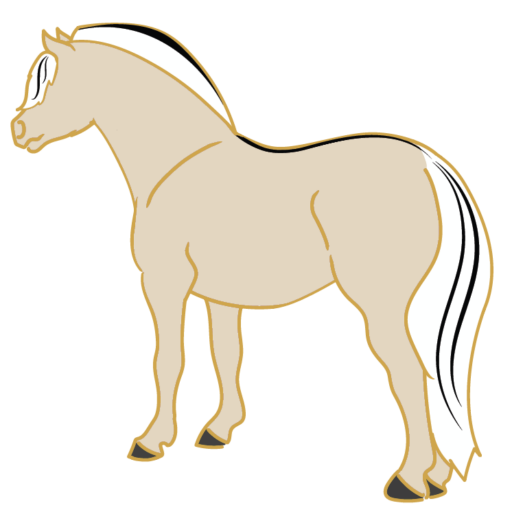
BROWN DUN (BRUNBLAKK)
Brown Dun, also known as bay dun, is the most common colour and can vary from very light creamy brown to quite rich deep golden brown. The dorsal stripe and other primitive markings will be black or distinctly darker than the coat colour. A brown dun carries one or two dominant Extension genes (E_), one or two dominant Agouti genes (A_) and is either homozygous Dun (DD) or D/nd1 (earlier testing would show nd1 as dun so it was thought all fjords were homozygous dun). If the dun gene was not present, this colour would be bay.
BRUNBLAKK
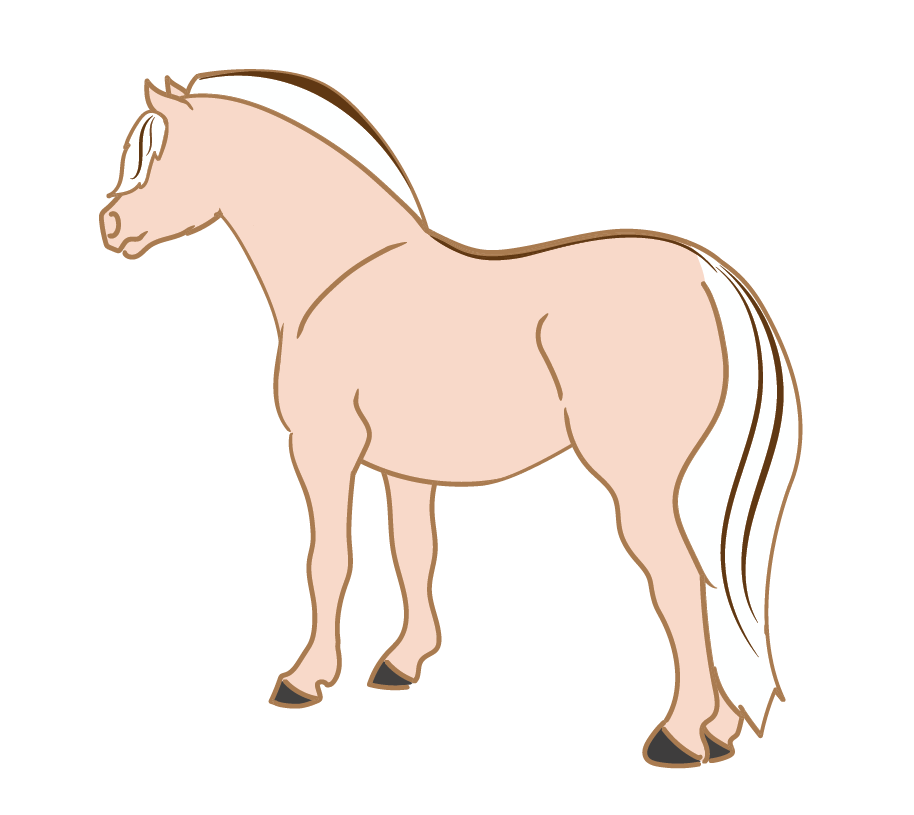
RED DUN (RØDBLAKK)
Red Dun is the second most common colour and is a reddish hue, with a red to brown dorsal stripe and markings, there will be no black hairs on this horse. Red dun may have white hooves at birth, but they will darken (not necessarily to black) as the horse matures. A red dun carries homozygous recessive Extension genes (ee), up to homozygous dominant Agouti (A_/aa) and is either homozygous Dun (DD) or D/nd1 (earlier testing would show nd1 as dun so it was thought all fjords were homozygous dun). If the dun gene was not present, this colour would be chestnut.
RØDBLAKK
WHITE DUN (ULSBLAKK)
White dun, also known as dunskin, has a white or yellowish white body colour with a black or darker than body colour dorsal stripe and markings. A white dun may have amber eyes. A white dun carries one or two dominant Extension genes (E_), one or two dominant Agouti genes (A_), one dominant Crème gene (CCr) and is either homozygous Dun (DD) or D/nd1 (earlier testing would show nd1 as dun so it was thought all fjords were homozygous dun). If the dun gene was not present, this colour would be buckskin.
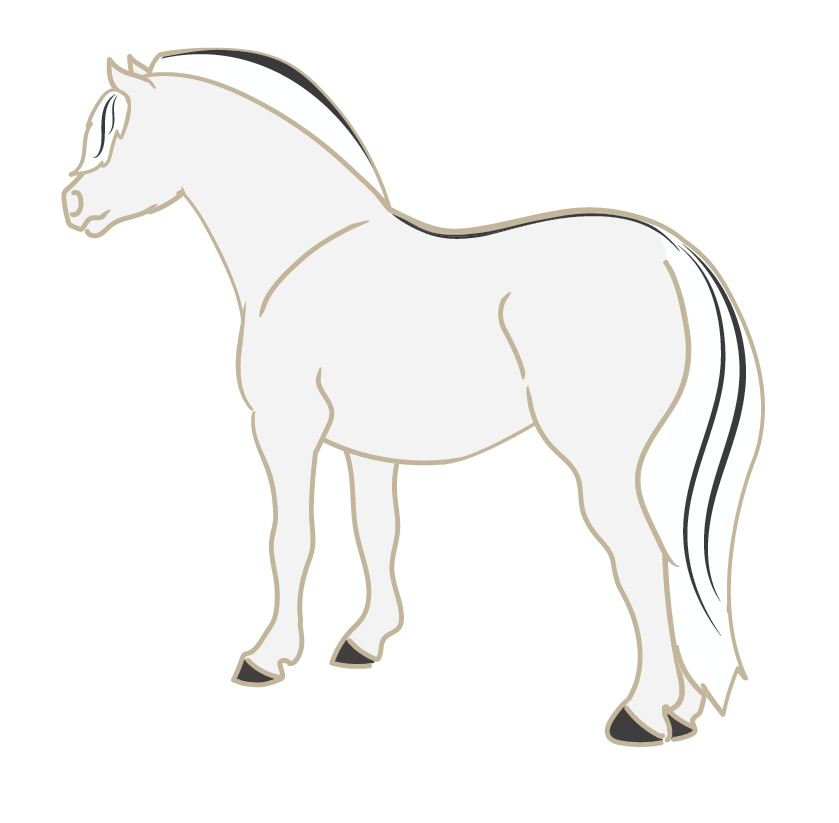
ULSBLAKK
GREY DUN (GRÅ)
Grey, also known as grulla or black dun, is a horse with a diluted black body colour varying from very light grey almost slightly brown, to a rich slate grey. The horse will have black or darker than body colour dorsal stripe and markings. A grey dun carries one or two dominant Extension genes (E_), homozygous recessive Agouti genes (aa) and is either homozygous Dun (DD) or D/nd1 (earlier testing would show nd1 as dun so it was thought all fjords were homozygous dun). If the dun gene was not present, this colour would be black.
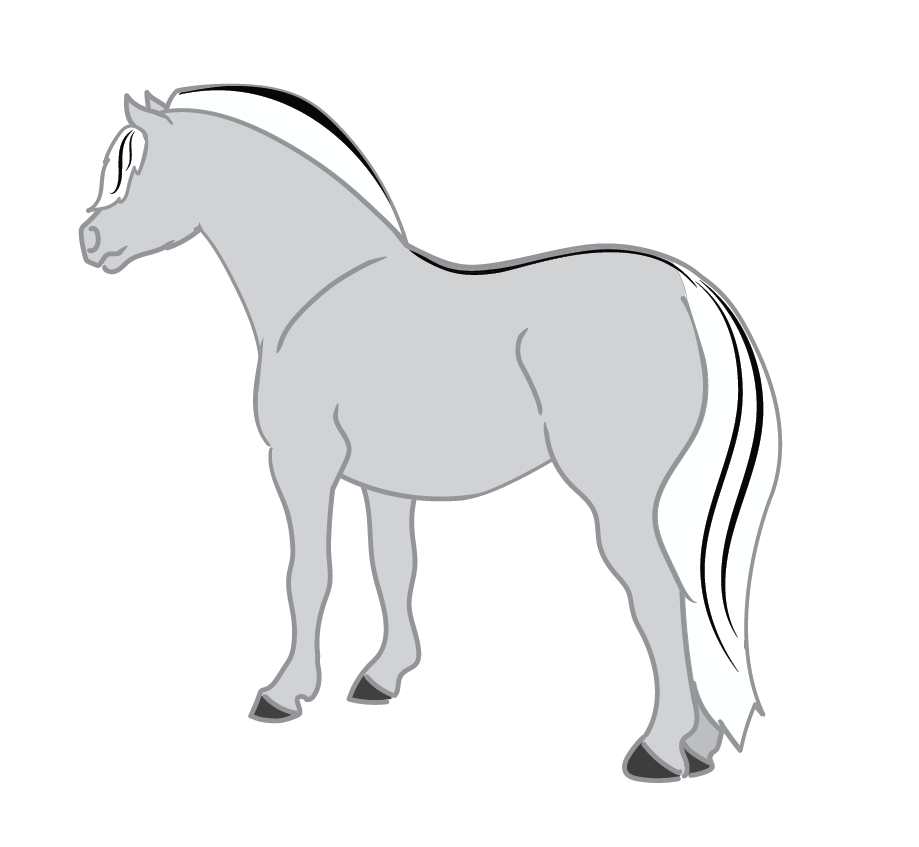
GRÅ
YELLOW DUN (GULBLAKK)
Yellow Dun, also known as dunalino, is the rarest amongst the Fjord colours. The body colour will be yellowish white and the dorsal stripe and primitive markings will be darker yellowish than the body colour. The dorsal stripe and primitive markings may be indistinct on this colour and the horse may be born with lighter coloured hooves like the red dun. The eyes will be dark. Blue or glass eyes is not permitted in the breed and is a sign of a double crème gene. A yellow dun carries homozygous recessive Extension genes (ee), up to homozygous dominant Agouti (A_/aa), one dominant Crème gene (CCr) and is either homozygous Dun (DD) or D/nd1 (earlier testing would show nd1 as dun so it was thought all fjords were homozygous dun). If the dun gene was not present, this colour would be palomino.
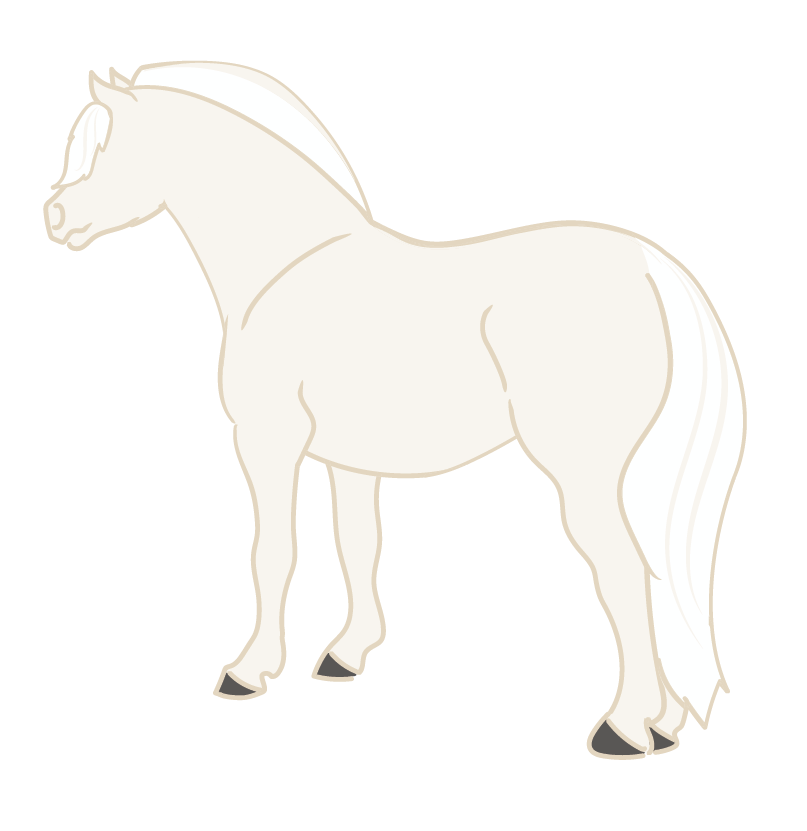
GULBLAKK
MANE & FORELOCK
It is common and desirable for the forelock of an adult Fjord Horse to cover at least 1/3 of the length of the head. The mane is traditionally trimmed to an arch complimenting the conformation of the individual and is a presentation requirement at assessment.
HEAD
The head of the Fjord Horse should be small and distinctive with a wide flat forehead. The bridge of the nose should be short and straight or slightly concave. The eyes should be large, dark, wide set and bright with a trustworthy expression. The nostrils should be large and wide, giving the nose a somewhat square shape without looking coarse. The jowls should be clearly delineated, especially in stallion, but not so much that it gives the head a heavy expression, and the groove between the jaw bones should be wide. The ears should be wide set, short and with a distinctive tip.
AND SO ON ONCE FINALISED……